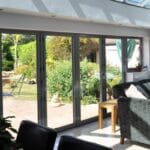
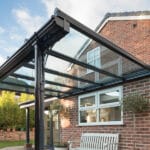
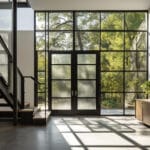
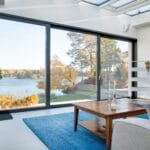
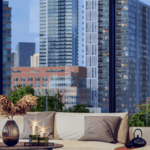
In the realm of high-end home transformations, the shift away from enclosed brick-and-mortar structures is undeniable. Today, discerning homeowners are choosing to dissolve the boundaries between their interiors and the natural world. If you are ready to revolutionise your living space, it is time to embrace the elegance of modern glass extensions.
At Atelier BDB, we specialise in converting dark, underutilised areas into architectural masterpieces. Our approach prioritises precision engineering and high-performance glazing, ensuring your home isn’t just larger, but significantly brighter and more energy-efficient. By rethinking the traditional house footprint, we allow natural light to become a primary building material that dictates the mood of every room.
What Defines a Modern Glass Extension in 2025?
For decades, the standard choice for adding light was a uPVC conservatory. However, these often suffered from temperature extremes becoming a greenhouse in summer and an icebox in winter. Modern glass extensions have completely redefined this concept. By utilising structural glass as a primary component, we create “glass box” designs that offer a sleek, minimalist aesthetic.
These contemporary structures serve as a high-performance link between your home and the landscape. Unlike older models, they feature:
- Advanced Thermal Breaks: To maintain a consistent internal temperature.
- Solar-Control Coatings: To prevent overheating during peak summer months.
- Architectural Integrity: Shifting the focus from “plastic” additions to permanent, value-adding structures.
Who Benefits Most from These Architectural Upgrades?
Modern glass extensions are not just for modern new builds. They are a great tool for any homeowner feeling “boxed in.” Families often use these extensions to create multi-functional zones. Here, the kitchen, dining area, and garden merge into one social hub.
Whether you need more family space or a garden-view office, these extensions offer versatility. By removing solid walls, these spaces create a sense of freedom. This improves the well-being of everyone in the home.
Where Can You Best Implement a Glass Roof Extension?
One of the most effective ways to transform a narrow or north-facing property is through the clever application of overhead glazing. A glass roof extension acts as a portal for natural light, flooding the deepest parts of your floor plan with sunshine that a standard window simply cannot reach.
The Benefits of Strategic Placement:
- The Kitchen Core: Placing glass over an island creates a dramatic, sun-drenched focal point for cooking and entertaining.
- Side Return Extensions: In urban environments, glass roofing prevents the “corridor effect,” pulling light into the center of the home.
- Visual Volume: Rooms with a glass ceiling feel exponentially larger because the vertical “limit” is removed, drawing the eye toward the sky.
Why Use Ultra-Slim Aluminium Windows and Modern Framing?
To achieve the “barely-there” look that defines premium architecture, the choice of framing is critical. We utilise ultra-slim aluminium windows to minimise visual clutter and maximise the glass-to-frame ratio. Aluminium is the material of choice because its inherent strength allows for much thinner profiles than timber or uPVC.
By incorporating these slim profiles, we can install massive, floor-to-ceiling panes without the need for thick, intrusive pillars. This ensures that your view remains focused on the greenery and over the horizon, not the hardware. Furthermore, the powder-coated finish offers a contemporary “industrial-chic” look that complements both period properties and new builds.
Choosing Your Opening: Bi-Folds vs. Sliding Systems
When designing contemporary glass extensions, the “opening” mechanism determines how you interact with your outdoor space.
| Feature | Aluminium Bi-Fold Doors | Slim-Frame Sliding Doors |
| Maximum Opening | The entire wall folds away for 90%+ airflow. | Usually 50% to 65% (panes slide behind each other). |
| Sightlines | More vertical frames are visible when closed. | Massive, uninterrupted panes with minimal framing. |
| Thresholds | Perfectly flush floor levels are easily achieved. | Often requires a track, though flush options exist. |
| Daily Access | Includes a “traffic door” for quick entry/exit. | Requires sliding a large pane for even small exits. |
| Best Use Case | Small-to-medium apertures; total integration. | Wide elevations where the “view” is the priority. |
How Do Aluminium Bi-Fold Doors Create Seamless Flow?
vvvA true modern home should breathe. To facilitate a perfect indoor-outdoor flow, many of our glass extensions UK projects feature aluminium bi-fold doors. These systems allow you to fold away entire walls, effectively merging your kitchen or lounge with your patio.
Engineering the Perfect Transition:
- Space Saving: They stack neatly to the side, maintaining a clear passage.
- Durability: Highly weather-resistant and virtually maintenance-free.
- Versatility: Use a single door for daily tasks, or open the entire set for hosting.
When is the Best Time to Invest?
The demand for glass extensions in the UK is at an all-time high as homeowners choose to “improve rather than move.” Investing now allows you to future-proof your home against rising energy costs by using high-efficiency, low-E glazing.
Planning and design should ideally begin 6-9 months before your target completion date. This allows for bespoke manufacturing and navigating any necessary planning permissions. Because these structures use prefabricated elements like aluminium framing, the on-site build time is often faster than traditional brickwork.
Maximizing Longevity and Value
The decision to embrace a modern glass extension is an investment in both your property’s market value and your quality of life. High-end buyers actively seek out properties with “wow factor” architectural features.
Because we use premium materials like toughened safety glass and marine-grade finishes, these structures are built to last for decades. Unlike timber (which can rot) or uPVC (which can warp), aluminium and glass retain their crisp lines and structural integrity with almost no maintenance. It is the ultimate blend of form and function.
Frequently Asked Questions (FAQs)
1. Do I need planning permission for a glass extension in the UK?
Many modern glass extensions fall under Permitted Development rights. However, if you live in a conservation area or a listed building, full planning permission is almost always required.
2. Are glass extensions cold in the winter?
Not with modern technology. We use advanced double or triple glazing with argon gas fills and low-E coatings. This ensures the space remains as thermally efficient as a traditional brick room.
3. How much does a modern glass extension cost?
Costs vary based on complexity. High-spec features like structural glass beams and ultra-slim frames influence the investment, but they also provide the highest return on property value.
4. Are aluminium bi-folds better than sliding doors?
It depends on your priority. Bi-folds offer a near-total opening (90%), while sliding doors provide larger, uninterrupted views when closed due to fewer vertical frames.
5. Is a glass roof extension hard to keep clean?
We recommend self-cleaning glass. This special coating uses UV rays to break down organic dirt, which is then washed away by rainwater, significantly reducing maintenance.