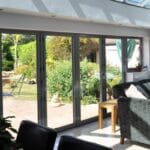
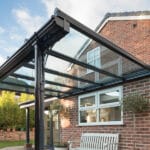
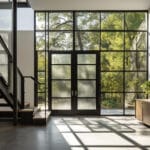
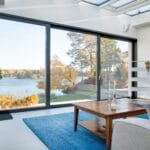
Homeowners today no longer view the outdoors as a separate entity. Instead, we want our living spaces to bleed into our gardens. When you plan a glass extension roof, you face a pivotal design choice: do you go frameless for that “floating” effect, or do you choose the sleek, defined lines of a framed structure?
As we move through 2026, we’ve seen the trends shift. While heavy, chunky frames are firmly a thing of the past, the choice between structural glass and ultra-slim metalwork is tighter than ever. Whether you are dreaming of Glass Kitchen Extensions or a modern glass orangery london style, we believe the roof defines the entire character of the build.
Why Is the Glass Extension Roof the Focal Point of Modern Design?
In our experience at Atelier BDB, the roof is the hardest-working element of any extension. It regulates temperature, dictates the flow of light, and determines the “wow factor” when you walk into the room. In 2026, the glass extension roof has evolved from a simple sun-room cover into a high-tech structural feat.
Our clients often choose glass roofs because they want to reclaim the sky. In dense urban environments, a glass conservatory extension in london provides a sense of volume and height that solid roofs simply cannot match. We’ve seen a well-designed roof turn a cramped kitchen into a cathedral of light. It changes how you feel at breakfast and how you entertain at night. By removing visual barriers, we help you effectively double the perceived size of your floor plan.
Who Benefits Most from Frameless Structural Glass?
Frameless glass is the pinnacle of minimalist architecture. If your goal is a “disappearing” structure, this is your winner. We often specify this for high-end Glass Kitchen Extensions where our clients want the ceiling to look like it isn’t there at all.
For these projects, we use thick, toughened panes joined by structural silicone. This removes the need for bulky rafters. This style suits period properties where we want to create a “transparent link” between the old brickwork and the new space without clashing styles. It also suits ultra-modern homes where “less is more” is the golden rule. If you want to sit in your living room and feel the raindrops hitting a transparent shield with no metal in sight, frameless is the only way to go.
Where Does Framed Glass with Ultra Slim Aluminium Windows Fit In?
While frameless is beautiful, we are seeing a massive resurgence in framed systems for 2026, specifically those using Ultra Slim Aluminium Windows technology. The “Industrial Chic” and “Crittall-style” trends have evolved into something much more refined.
Modern framed roofs use internal skeletons that are incredibly thin. We use these frames to provide a sense of rhythm and geometry to a room. For a glass orangery london project, a framed roof helps the structure feel like a permanent part of the house rather than a temporary glass box. The frames also allow us to integrate high-performance ventilation and lighting more easily. When we pair these with the ultra slim bifold doors london homeowners love, the matching frames create a cohesive, architectural “grid” that looks intentional and expensive.
How Do You Choose Between Frameless and Framed Systems?
Choosing the right glass extension roof depends on three main factors: your budget, your home’s architecture, and your tolerance for maintenance.
- The Visual Goal: If you want a seamless view of the clouds, we suggest going frameless. If you want your extension to have a “finished” interior look with defined shapes, we recommend a framed system.
- Thermal Performance: Both systems now offer incredible U-values. However, framed systems often allow for slightly easier installation of complex triple glazing.
- The Connection: Look at your doors. If we are installing ultra slim bifold doors london style, we often suggest a framed roof to match the powder-coated finish of the door tracks.
- Maintenance: Frameless glass requires a very slight pitch to ensure water run-off. Framed roofs need high-quality seals to ensure longevity against the British weather.
Comparative Performance: Frameless vs. Framed
| Feature | Frameless Structural Glass | Framed Aluminium System |
| Visual Impact | Total transparency; “Floating” look | Architectural lines; Structured feel |
| Light Intake | Maximum; No internal shadows | High; Minor shadow lines |
| Cost Profile | Premium (requires crane) | Mid-range (versatile installation) |
| Hardware Match | Pairs with “invisible” glass walls | Pairs with Ultra Slim Aluminium Windows |
What Are the Cost Implications of a Glass Roof Extension?
We consider a Glass Roof Extension an investment in your property’s valuation. In the current market, “light-filled” is the number one keyword for buyers.
Generally, a completely frameless structural glass roof is more expensive than a framed one. This is because the glass itself must be much thicker to support its own weight and environmental loads. A framed Glass Roof Extension using Ultra Slim Aluminium Windows components is often more cost-effective because the metal handles the structural heavy lifting, allowing for slightly thinner (though still highly insulated) glass units.
Creating the Ultimate Glass Structure Extensions
When you work with us at Atelier BDB, our goal is to create glass structure extensions that feel like a natural evolution of your home.
In 2026, we are seeing a trend of “Hybrid Roofing.” This involves using a solid perimeter with a large central glass extension roof lantern. This allows us to install recessed spotlights and speakers in the solid sections while you enjoy the sky-view in the center. Whether we are building a glass conservatory extension in london or a wrap-around kitchen diner, the integration of the roof with your ultra slim bifold doors london will define the success of the project.
Quick Guide to Your Project
- Who should I hire for a glass extension? You should hire an architectural glazing specialist who understands structural loads. Standard builders often lack the equipment to handle large-format glass safely.
- What is the best glass for a roof? In 2026, you should look for “Self-Cleaning, Solar-Control” glass. This glass has a coating that breaks down organic dirt and reflects heat during the summer.
- When is the best time to build? Spring and Summer are ideal for the groundworks, but our team can install a glass extension roof year-round.
- Where can I see these designs in person? Look for recent glass orangery london showrooms or ask us about completed residential projects in your area.
- Why choose aluminium over uPVC? Aluminium is stronger, meaning the frames can be much thinner. For ultra slim bifold doors london projects, aluminium provides the structural integrity needed for massive glass spans.
- How do I keep a glass roof private? You can use integrated blinds or switchable “Smart Glass” that turns opaque at the flick of a switch.
FAQs
1. Is a glass extension roof too hot in the summer?
No, not with the technology we use today. By using solar-control coatings, a glass extension roof reflects up to 80% of solar heat. We also recommend electronic roof vents to maintain a comfortable climate year-round.
2. How long do glass structure extensions last?
The high-quality glass structure extensions we build are designed to last 30 to 50 years. Our aluminium frames are powder-coated to prevent corrosion, and our structural silicone joints are designed to withstand extreme weather shifts.
3. Do I need planning permission for glass kitchen extensions?
In many cases, you can build under “Permitted Development.” However, for a significant Glass Kitchen Extensions project in a London conservation area, you will likely need formal planning permission. Always consult with us first.
4. How do I clean a frameless glass roof?
Most 2026 glass roofs we install feature “Easy-Clean” or “Self-Cleaning” coatings. These use UV light to break down dirt, which then washes away with rainwater.
5. Can a glass roof extension support the weight of snow?
Yes. Every glass extension roof we design is bespoke-engineered to meet local building regulations for “snow loads” and “wind loads,” ensuring the roof is perfectly safe even in heavy winter weather.